The Mammogram You Keep Putting Off

Maybe you told yourself you'd schedule it next month. That "next month" might have turned into six months, or even two years. Or maybe you've never even thought about it, because just getting started feels like too much.
If this sounds like you, you're not alone. Mammograms can bring up real fears — fear of pain, fear of bad news, worry about cost, and the awkwardness of standing half-dressed in a cold room doing something unfamiliar. October is Breast Cancer Awareness Month, and at STRIDE, we think it's better to talk about these fears than to ignore them.
The numbers, briefly
Breast cancer is the second most common cancer in women in the United States. It's also the second biggest cancer killer of women. About 240,000 women get diagnosed each year, and almost 43,000 die from it. These numbers haven't gone down as much as we'd like.
But the advice has changed. In 2024, health experts lowered the age to start regular mammograms from 50 to 40. This change happened because new research shows that catching cancer in a woman's 40s can be treated better — and can save lives.
The advice is clear now. But fear hasn't gotten the message yet.
"For me, the age-40 change matters because it gives us a better chance to detect breast cancer earlier, when it is often more treatable. Starting routine screening at 40 can help patients get answers sooner and, in some cases, improve outcomes," Heather Scott says.
Let's talk about the fear — because it makes sense.
What if they find something? This is the big worry, and it deserves to be said out loud instead of pushed away. But here's the point of a mammogram: to catch problems early, when they're easiest to treat. A mammogram doesn't tell you that you have cancer; it just gives you and your doctor a head start if something needs a closer look. Most women who get called back for more testing do NOT have cancer. A callback isn't bad news; it's just the next step.
Will it hurt? It's usually not painful, but it can feel uncomfortable. Each picture only takes a few seconds. One trick: try to schedule it for a time when your breasts aren't tender, which is usually the week right before your period; avoid that week if you can. And if something feels wrong during the exam, tell the technologist. They can adjust it.
What about the cost? Many women say things like "I don't have insurance" or "I can't afford another bill," and quietly skip getting screened. If this is you, know that help is out there. While we don't offer mammograms on-site, we make sure you don't have to figure it out alone. Our Cancer Screening Care Coordinators can refer you to a provider and help you see whether you qualify for the Women's Wellness Connection program, which helps cover the cost of breast cancer screening.
It's normal to feel nervous about what a mammogram might show—about your body, your family, and your future. Those feelings are real and completely human. But getting this information can open up choices you wouldn't otherwise have. A mammogram doesn't change your health today; it gives you and your doctor the information you need to act early, if needed.
"I wish more patients knew that early detection is not just a slogan—it can truly change what comes next. Finding breast cancer sooner can mean more treatment options and a better chance of a successful outcome." - Heather
What actually happens at your appointment
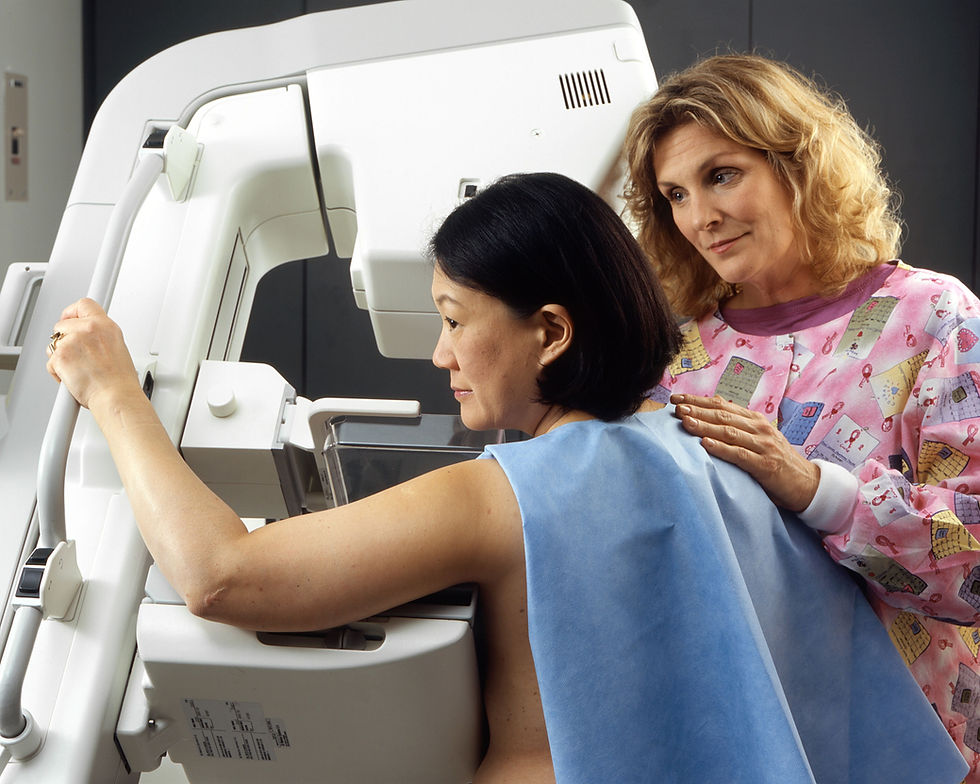
If you've never had a mammogram, it's probably less scary than you're imagining. A technologist places your breast between two plates. The plates press together for a few seconds to get a clear picture. Then the machine takes a few X-ray images from different angles. You'll usually get your results within a few days to a couple of weeks.
Who needs screening, and how often?
Age 40 and up, average risk: Start regular mammograms now. Ask your STRIDE provider whether you should get one every year or every two years; both are fine, and the right choice depends on your personal risk.
Family history of breast cancer: You may need to start earlier; sometimes with an MRI too. Talk to your STRIDE provider before you turn 40 if breast cancer runs in your family.
Dense breast tissue: You might need extra imaging along with your mammogram. Your results letter will usually tell you your density level. Ask your STRIDE provider what it means for you.
"Dense breast tissue is something I talk about often. It is very common, but it can make mammograms harder to read. If a patient is asked to come back for a breast ultrasound, I try to reassure them that it is an important part of making sure we are getting the clearest picture possible," says Heather.
Taking care of your health starts with one step: scheduling your mammogram. If cost or insurance is holding you back, our Cancer Screening Care Coordinators are here to help, including connecting you with the Women's Wellness Connection program if you qualify.
Ready to schedule an Appointment?
Call (303) 778-7433 for More Information or to Schedule an Appointment


